
Since 2 August 2026, further obligations under the European AI Act apply. The question we have heard most often since: does this make our invoice processing a high-risk system? No. Recognising and checking invoices falls into none of the Act’s high-risk categories – and the EU has in any case postponed those obligations to December 2027 with the Digital Omnibus adopted in July 2026. What applies to users today is modest: the people working with the system should understand what it does and where its limits lie.
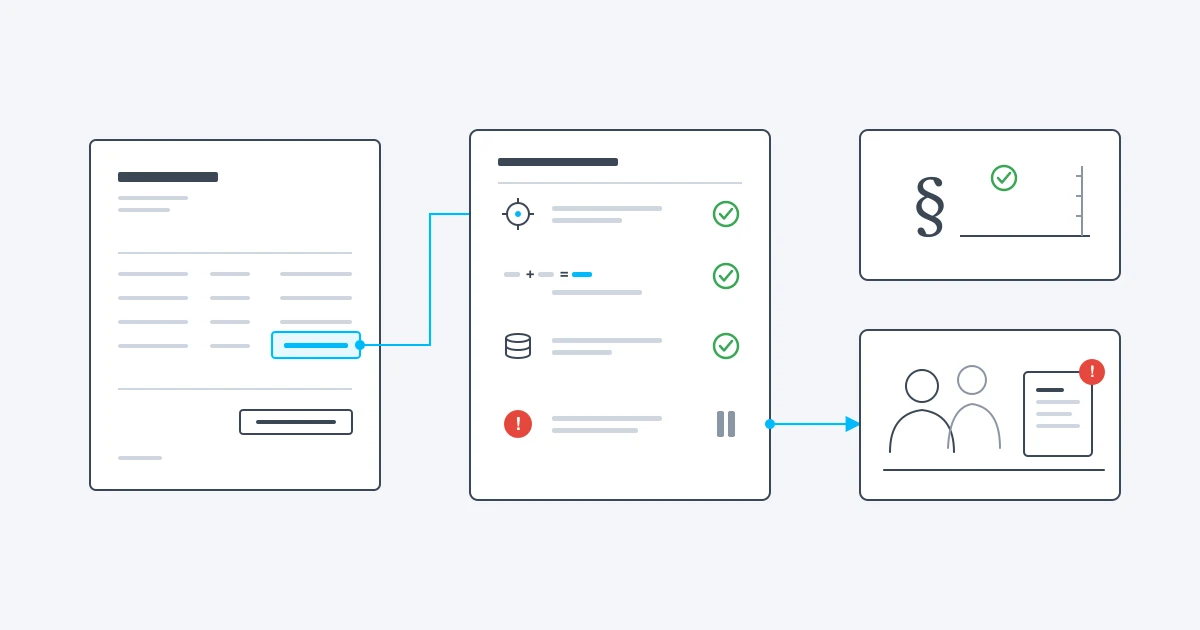
That the legislator asks for little does not mean you should ask for little. An invoice whose figures were read by an AI ends up in the service-charge statement and, eventually, in front of the tax auditor. What counts there is not the system’s risk class, but whether every value can be explained. Four things you should therefore demand of any provider:
- The origin of every value: each extracted figure stays linked to the page and the position in the original document where it appears – not merely to a confidence score
- A record of every check: which readings, arithmetic checks and master-data comparisons an invoice went through is recorded on the case and retrievable months later
- No posting past an open question: if a value deviates or a check fires, the case stops until a person confirms or dismisses the finding – with a four-eyes step if you wish
- No guessing: where an assignment is ambiguous, the system presents it rather than posting the most likely option
The AI Act sets a floor. The yardstick for your invoice recognition is not whether it is permitted, but whether in three years you can still explain why a figure was posted the way it was.
Cube Gateway: checking, approval and handover →Please note: this article reflects the legal position and administrative guidance as at the date stated and is no substitute for tax or legal advice.