
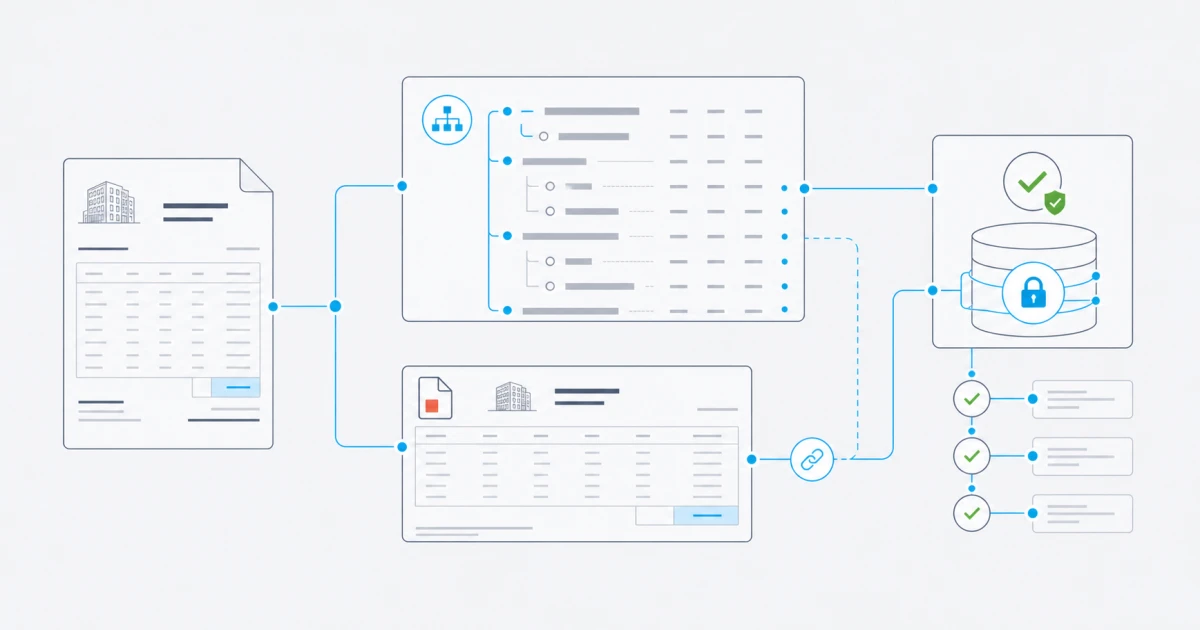
With an e-invoice, the original is not what you see on screen. In legal terms the invoice is the structured data record – the XML. It is precisely this part that must be retained: for eight years, unchanged and machine-readable. A printout or the PDF generated for viewing is not enough.
At the same time, the Federal Ministry of Finance clarified in 2025 that filing need not take place in a specialised archiving system – what matters is that the structured part remains unchanged and traceable. In practice this means:
- The email inbox is not an archive: inboxes get tidied, moved and cleared out – an invoice needs orderly, unchangeable filing
- With hybrid formats such as ZUGFeRD, keep the file containing the XML part, not just the display PDF
- Context is part of the record: check results, approvals and processing steps keep the case traceable years later
- Processing must not alter the original – conversions and enrichments belong in copies and metadata
The archiving question is best solved where the invoice arrives: when the document, the XML, the audit log and the approval stamp leave invoice intake together, archiving is no longer a project of its own.
Cube Gateway: checking, approval and handover to the archive →Please note: this article reflects the legal position and administrative guidance as at the date stated and is no substitute for tax or legal advice.